Capture the context
Bind the image to the part ID, revision, camera settings and station. A good prediction attached to the wrong part is still a failed inspection.

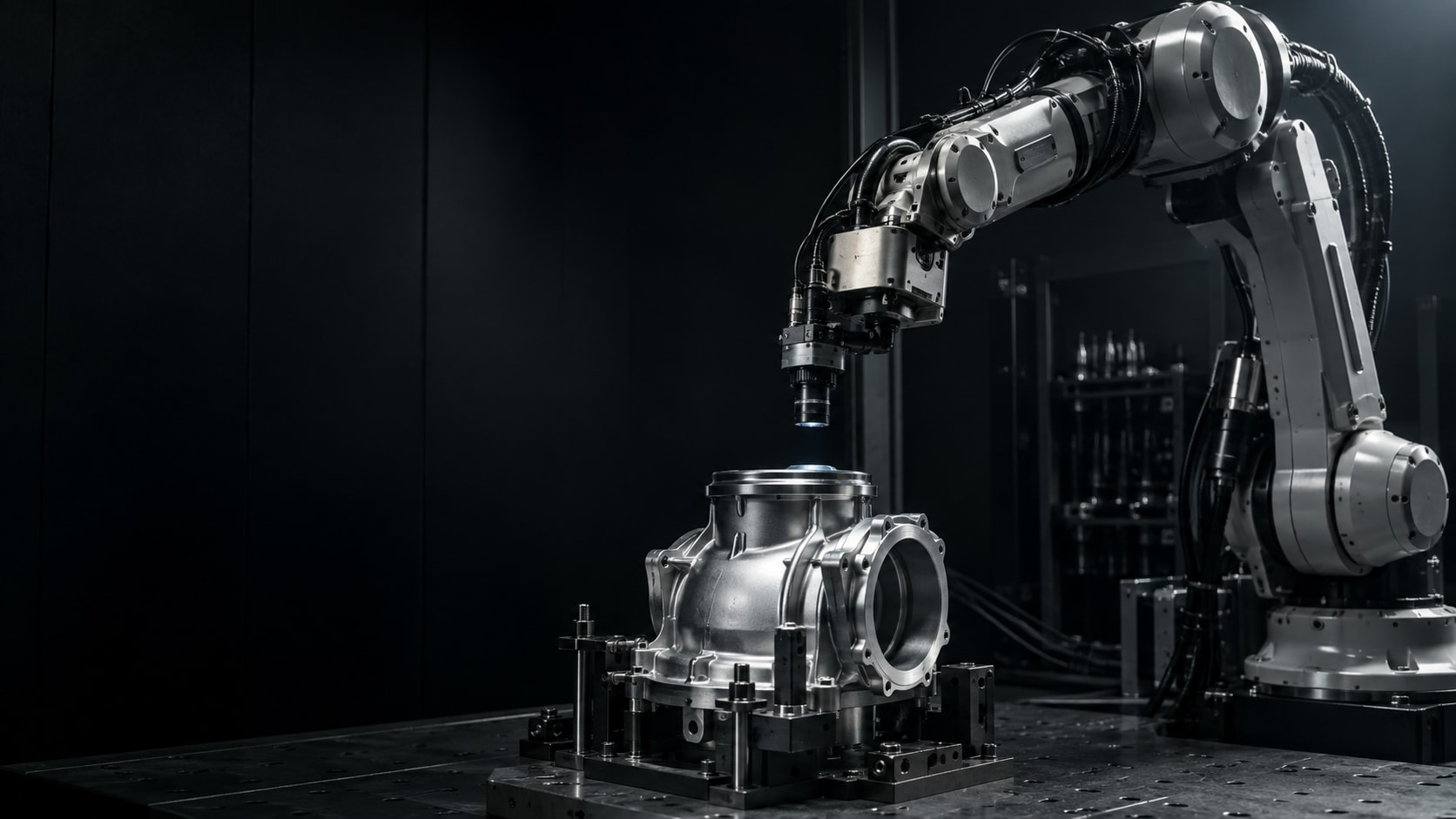
A missed defect, a difficult part variant, an operator searching for setup instructions. We assess where perception and AI assistance can improve one production task, then engineer the connection to your quality and automation systems.
Choose the task
Check parts against defined defect classes. Keep the image, part variant and inspection criteria with the result so quality staff can investigate uncertainty and false rejects.
Retrieve the setup instructions, tooling records and approved checks for the machine and part revision in front of the operator. An uncertain match should trigger a question.
Assess perception or planning for a bounded cell operation. Test the range of parts, poses and environmental conditions before allowing any command into the automation layer.
Inspection workflow / example
A proposed workflow for a single inspection station. The first objective is to establish reliability across real production variation.
Bind the image to the part ID, revision, camera settings and station. A good prediction attached to the wrong part is still a failed inspection.
Locate the suspected defect and attach the relevant inspection criterion. Flag unfamiliar parts and uncertain images for review rather than forcing a pass or fail.
Quality staff resolve flagged cases. Record the approved disposition in the quality system and retain the evidence needed to investigate later.
The operating boundary
Perception and language models do not replace safety functions. Your automation specialists define permitted commands, interlocks and safe states. Machinery changes require the appropriate engineering assessment.
Lighting changes, reflections, occlusion, new finishes and camera movement belong in the test set. Check performance by defect class and part variant.
Define what happens when a camera fails, the network drops or an operator intervenes. A restart must not repeat a physical action that already occurred.
A staged release
On smaller screens, scroll sideways to compare all columns.
| Stage | The system can | Evidence needed |
|---|---|---|
| Observe | Run alongside the existing inspection process. | Matched cases, labeled defects and a comparison with the current method. |
| Assist | Show findings to an operator for disposition. | Useful explanations, acceptable review effort and reliable uncertainty routing. |
| Act within limits | Issue explicitly permitted actions through the agreed controller interface. | Cell-specific acceptance, tested recovery and approval by the responsible engineering team. |
Questions before we start
Not necessarily. We first inspect camera coverage, controller interfaces, cycle time and the existing inspection process. New sensing or compute is considered only where the task needs it.
Representative good and rejected parts, uncommon defects and normal shifts in production conditions. Measure missed defects and false rejects separately, together with cycle time and the number of cases sent to an operator.
The inspection plan, sample images or parts, the cell layout, available interfaces and a named quality or automation owner. Share only material you are authorized to disclose.
Bring the part, the inspection criterion and the variation your team struggles with. Start with one task whose result can be tested.
Start a conversation